
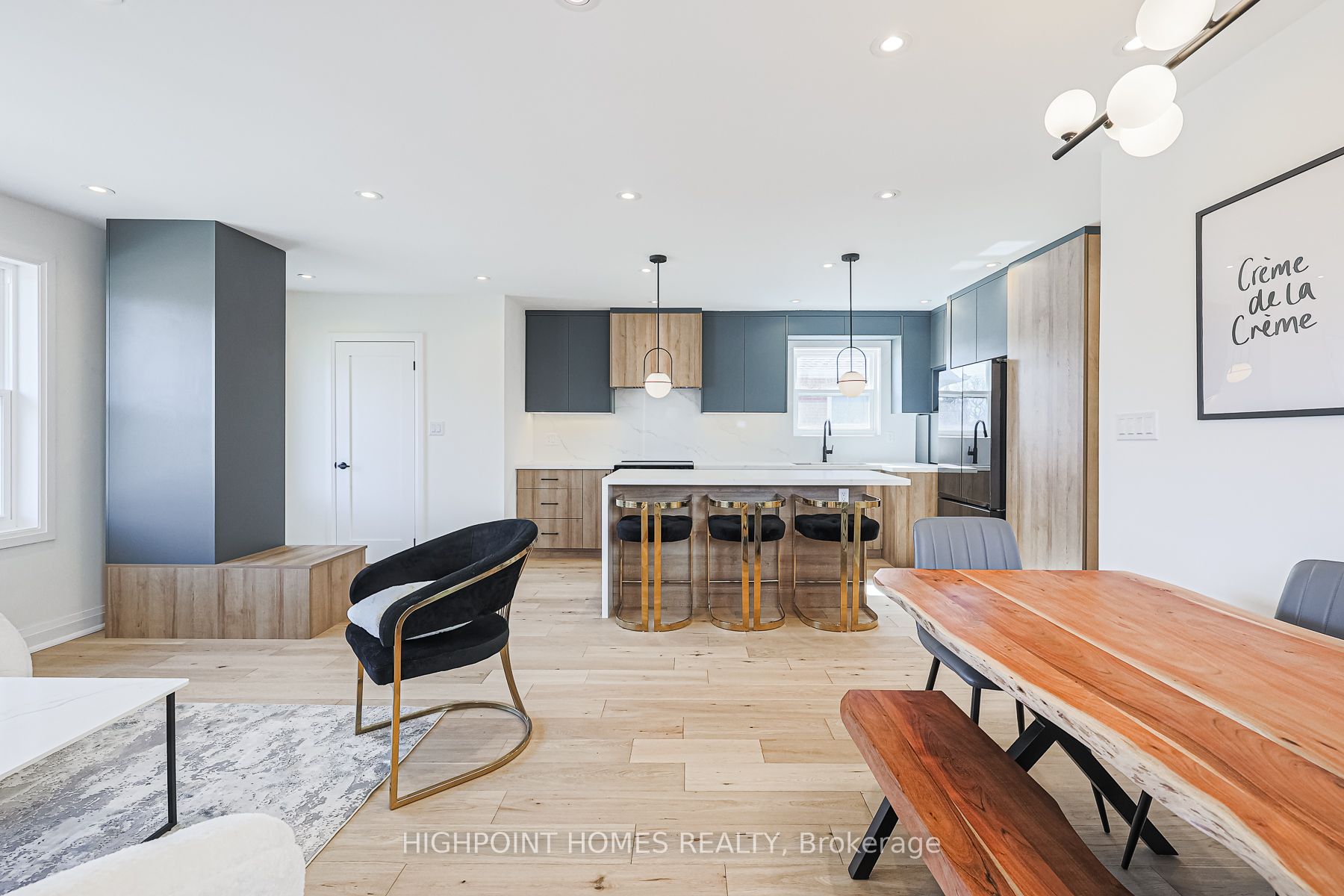
Why Every Toronto Homeowner Thinks About This
If you own a home built before 2000 in Toronto, Markham, Stouffville, or anywhere in the GTA, you’ve probably looked at your main floor and thought: “What if we just took out that wall?”
The wall between the kitchen and living room. The one that makes the dining room feel like a hallway. The one that blocks all the natural light from the front windows.
Open-concept renovations are consistently one of the most requested projects we do. They’re also one of the most misunderstood. The gap between “knocking out a wall” and “safely removing a load-bearing wall with proper engineering” is where projects go wrong, budgets blow up, and — in worst cases — structural damage happens.
Here’s what the project actually involves, what it costs, and what to watch out for.
The First Question: Is the Wall Load-Bearing?
This is not a question you can answer by looking at it. It’s not a question your contractor should guess at. It requires a structural assessment by a licensed professional.
What “Load-Bearing” Means
A load-bearing wall carries the weight of the structure above it — the roof, the upper floors, or both — down through the wall and into the foundation. Removing it without replacing that structural support causes the floors above to sag, ceilings to crack, and in severe cases, partial collapse.
How to Identify It
There are general clues: walls running perpendicular to the floor joists, walls in the centre of the home, walls directly below the roof ridge. But these are indicators, not proof. In Toronto’s diverse housing stock — Victorians, post-war bungalows, semi-detached homes, wartime housing — the structural logic varies widely. A structural engineer examines the joists, the attic framing, and the basement/foundation to trace the load path and confirm definitively whether the wall is bearing weight.
A Common Trap in Smaller Toronto Homes
Homes under 18 feet wide often use full-span floor joists on the main floor, which means there’s no central basement beam. This leads some contractors to assume the interior walls aren’t load-bearing. But the second floor often has shorter, weaker joists (2×8 instead of 2×10) that transfer load to the main-floor walls. These are partially load-bearing walls, and removing them without reinforcing the second-floor structure can cause serious problems. This is exactly why a professional assessment is non-negotiable.
What Happens When You Remove a Load-Bearing Wall
The wall doesn’t just disappear. Its structural function is replaced by a beam and post system that carries the same loads through a different path.
The Process
- Structural engineering: A licensed P.Eng. assesses the wall, calculates the loads (live load, dead load, snow load), and designs the replacement beam and support system. They produce stamped drawings for the permit application.
- Permit application: Any load-bearing wall removal in Toronto requires a building permit. The stamped engineering drawings are submitted with the application. Permit approval currently takes 2–4 weeks.
- Temporary shoring: Before the wall comes down, temporary support walls are built on both sides to hold the load while the new beam is installed.
- Demolition: The wall finishes, framing, and any services (electrical, HVAC, plumbing) running through the wall are removed.
- Beam installation: The engineered beam (LVL or steel) is lifted into place and secured to the support posts at each end.
- Post and footing verification: The posts need to transfer the beam’s load to the foundation. This may require adding a concrete pad footing in the basement.
- Service rerouting: Electrical wiring, HVAC ducts, and any plumbing that ran through the wall are relocated. This often requires a separate electrical permit and ESA inspection.
- Finishing: Drywall, patching, flooring transitions, and paint to make the space seamless.
- Inspection: The City of Toronto inspects the framing and beam installation before finishes are applied, and conducts a final inspection after completion.
Beam Types
LVL (Laminated Veneer Lumber): The most common choice for residential spans in the GTA. Strong, stable, and readily available. Works well for spans up to about 20 feet.
Steel I-beam: Used for longer spans or heavier loads. Slimmer profile (important when ceiling height is tight), but heavier and more expensive to install.
Flush vs. Drop Beam
A flush beam sits within the ceiling plane, creating a seamless look. A drop beam hangs below the ceiling. Flush beams look better but cost more because they require cutting into the ceiling joists and sistering additional joists alongside. If ceiling height is generous, a drop beam with a clean drywall wrap can look perfectly fine and save $2,000–$5,000.
What Does an Open-Concept Renovation Cost in Toronto?
Single non-load-bearing wall removal: $3,000–$8,000 including finishes.
Single load-bearing wall removal with beam: $8,000–$20,000 including engineering, permits, beam, and finishing.
Multi-wall open-concept with kitchen integration: $25,000–$50,000+ depending on the number of walls, beam complexity, and the extent of kitchen and finishing upgrades.
Full main-floor renovation (walls, kitchen, flooring, lighting): $50,000–$120,000+.
[Informed estimate: cost ranges based on GTA contractor pricing and structural engineering fees. Steel beams and longer spans push toward the higher end.]
Cost Breakdown: Where the Money Goes
Structural engineering: $1,500–$3,500 for assessment and stamped drawings.
Permits: $500–$1,500 depending on scope.
Beam and installation: $3,000–$10,000 depending on material, span, and whether it’s flush or dropped.
Service rerouting: $2,000–$6,000 for electrical, HVAC, and any plumbing relocation.
Finishing (drywall, paint, flooring): $3,000–$8,000 depending on the area affected.
Design Decisions That Make or Break the Result
Flooring Continuity
An open-concept space needs continuous flooring from the kitchen through the living and dining areas. Transition strips between different flooring materials break the visual flow and undermine the whole point of removing the wall. This is one of the strongest arguments for LVP or engineered hardwood — materials that can run seamlessly through wet and dry zones.
Kitchen Ventilation
With no wall separating the kitchen from the living space, cooking odors travel freely. A high-quality range hood with adequate CFM rating is essential, not optional. For open-concept kitchens, look for hoods rated at 400+ CFM with exterior venting. Recirculating hoods are inadequate in this layout.
Lighting Zones
A single open space needs distinct lighting zones to feel defined: task lighting over the kitchen island and counters, ambient lighting in the living area, and accent lighting to create visual interest. Without zoned lighting, an open-concept main floor can feel flat and institutional.
Sound Management
Open spaces are louder. Hard flooring and high ceilings amplify sound. Plan for soft furnishings (area rugs, upholstered furniture), and consider acoustic strategies in the ceiling if you’re opening up a large area. This is a detail that homeowners rarely think about until they’re living in the space.
Storage Replacement
Walls that get removed often contained closets, built-in shelving, or simply acted as surfaces for furniture. An open-concept renovation needs a storage strategy — a kitchen pantry, a mudroom, built-in cabinetry — to replace what’s lost. Open-concept without adequate storage quickly becomes cluttered-concept.
When Not to Go Open Concept
Open-concept isn’t always the right answer:
- If you work from home and need quiet, dedicated office space on the main floor, open-concept eliminates that option.
- If multiple people in the household have different schedules (one sleeping, one cooking), closed rooms offer acoustic and visual separation that open plans can’t.
- If the structural complexity is extreme (multiple load-bearing walls, utilities concentrated in the walls to be removed), the cost can exceed the value added.
- If you plan to sell to a market that values defined rooms — some heritage neighborhoods and cultural communities prefer traditional layouts.
Bottom Line
An open-concept renovation is one of the most transformative things you can do to a Toronto home. It changes how the space feels, how light moves through it, and how your family uses the main floor. But it’s a project that demands proper engineering, permits, and thoughtful design — not just demolition.
Done right, it’s an investment that pays back in both daily livability and resale value. Done wrong, it’s a structural liability.
Considering an open-concept renovation? Contact Carlton Renovations for a free structural consultation →Contact Us
Check Out Our Previous Open Concept Projects → Projects
Modern Kitchen Trends: Beyond the White Cabinet
3 Bathroom Upgrades That Actually Increase Your Home Value
Open-Concept Renovation: What It Actually Takes to Remove a Wall
How Much Does a Basement Renovation Cost in Toronto?
How to Choose a Renovation Contractor in Toronto
Luxury Vinyl Plank Flooring in Toronto – Is it Worth it for Your Home?